


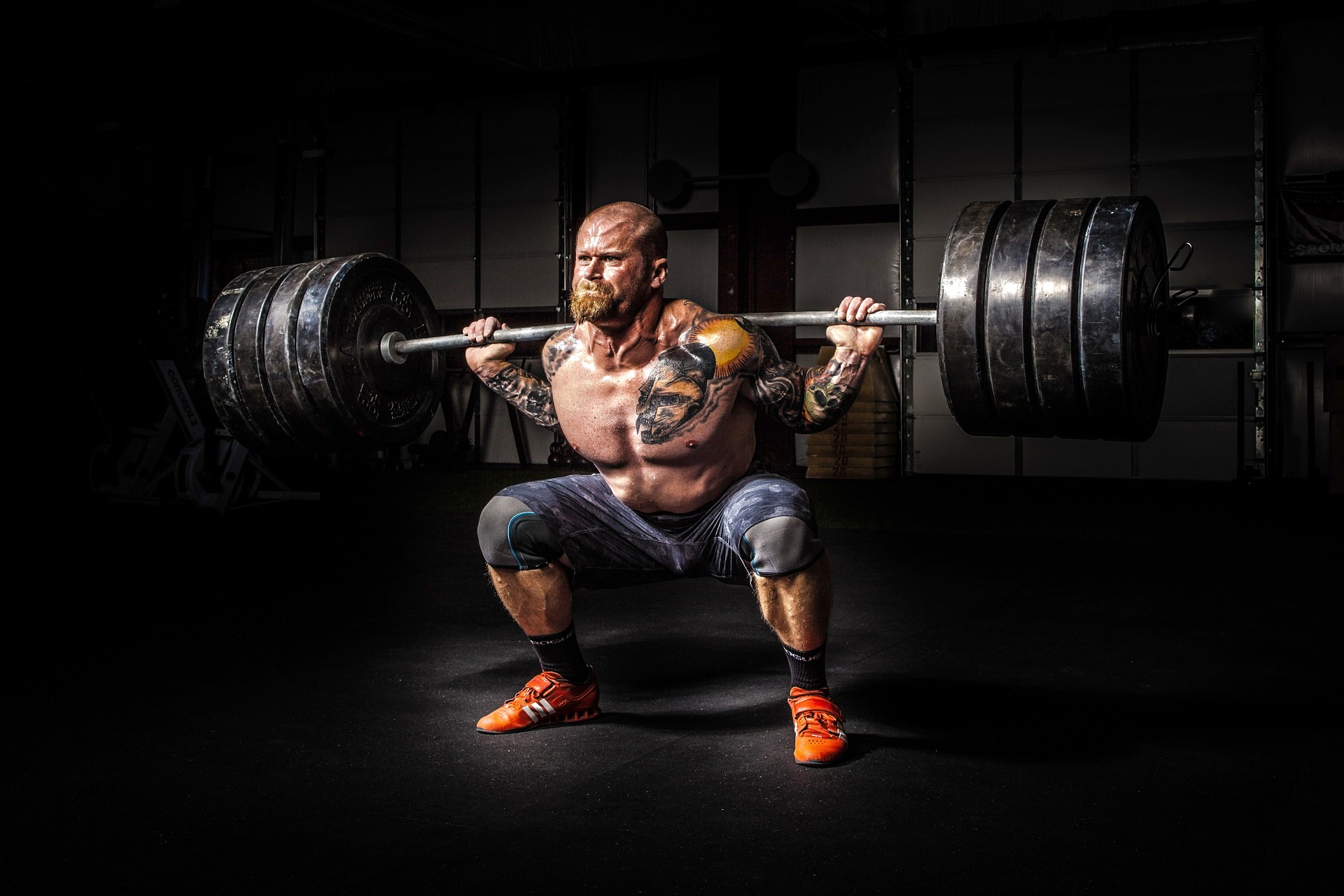
Coach’s $0.02: What is “Strong”?
In previous posts (here, here and here), I’ve outlined some basics but I’ve never directly addressed what is strong. “Strong” is a threshold of performance determined by a specific context.
The threshold of performance is relative to those you’re competing against/with and to the rules governing the sport. In most contexts, increasing your 1RM (1 rep max) in exercises of basic human movement, e.g. squats, presses, heavy pulls, will meet this threshold, i.e. make you “strong”. For example, improving your squat 1RM from 135lbs to 225lbs and then to 315lbs will result in higher qualities of performance on the soccer field at each increase in 1RM squat. You’ll be able to run faster, accelerate more quickly, and kick the ball farther. Speed, acceleration, and force are all necessary in almost every sport. Since force (f=mass x acceleration), aka strength, is the base of everything in sports performance, increasing it is of paramount importance for sports performance improvement. This means strength transfers to every athletic venture, not just soccer.
Since there’s a lot of transfer to many contexts by increasing your 1RMs, what specific exercises train squats, presses, and heavy pulls? The exercises are the low bar back squat, aka the squat, bench press, overhead press, and the deadlift. These use the most muscle mass over the largest range of motion while simultaneously allowing for long term strength development. Therefore, they are the best exercises to train the 3 basic human movements. Variations of the “big 4” are acceptable to use if anthropometry, injury, or program compliance become roadblocks. If the variation doesn’t fit the description above, it’s not worth making a main exercise in your program. Variations include but aren’t limited to high bar squat, safety squat bar squat, front squat, close grip bench, multi or neutral grip bar bench, neutral grip overhead press, block pulls, or rack pulls.
So why the 1RM? Why not another rep range? Increasing 1RM will result in the ability to do more reps at lower weights. For example, your 1RM deadlift was 315lbs and you could perform a set of 10 reps at 185lbs. You train a while and increase your 1RM deadlift to 500lbs. You probably can do a set of 10 reps of deadlift at 205-225lbs. Replace deadlift with any exercise and you’ll find the example to still be true.
In short: increase 1RMs of the squat, bench press, overhead press, and deadlift. Overtime increases in these will result in you being “strong” relative to whatever context you choose to participate in.


Leave A Comment